Robert Kiyosaki: Why the Ultimate Stock Market Crash Will Begin in 2016
Listen in as the real estate mogul and oil/gas investor explains to Jerry Robinson why he believes the biggest stock market crash in history could likely begin this year — and how he is preparing his own financial house.
CHART: Volatility Rocks the Global Financial Markets
Major technical damage has occurred to the charts of U.S. stocks, and the path of least resistance is down. Be advised.
WEBCAST: 3 Ways To Profit From a Market Collapse
In this 65-minute video webcast, Jerry Robinson explains three powerful strategies for profiting from an eventual downturn in the stock market.
CHART: Why (and How) I am Betting on Volatility
Over the past two decades, every time stocks experience a steep decline, volatility reacts the same way.
European Stocks, Bonds Soar On Potential Greek Deal
German and French stocks had their best day since 2012 as Eurozone bonds soar…
CHART: These Emerging Countries Are Most Vulnerable to a Fed Rate Hike
If any of your investments have exposure to these vulnerable emerging economies, watch them closely as the Fed intensifies its talk of a rate hike.
Doug Casey: Signs of a Resource Sector Bottom
The prudence of owning precious metals is more paramount than ever.
CHART: Oil Poised to Rise Against All Odds as Mideast Goes Up in Flames
If oil prices pop in the coming days, it won’t be based on economic fundamentals.
PODCAST: Buy and Hold is Dead
On today’s show, economist and FTMDaily.com founder Jerry Robinson shares some of the major moves he is making with his own investments as the stock market reaches new highs. Since December of 2009, Jerry has been riding the uptrend in U.S. stocks higher. However, at the end of 2014 and the beginning of 2015, Jerry […]
Retire Abroad and Offshore Your IRA
Secure your IRA from bankrupt politicians by taking it offshore and retiring abroad.
Doug Casey on ISIS, Gold, Oil, and What to Expect in 2015
What does Doug’s guru-vision foresee for 2015?
CHART: Major Buy Signal Looms on Gold
Want to be alerted when gold prices finally flash a new buy signal?
SPECIAL OFFER: Gold member Membership
Lock in our best price now and unlock instant access to our latest investing and income ideas!
Will the Stock Market Collapse in 2014?
On this week’s podcast, Jerry Robinson shares his simple approach to investing in U.S. stocks and explains why a stock market collapse could be a very profitable event for those who understand trends.
An Introduction to Peer to Peer Lending
On this week’s episode, Jerry Robinson is joined by Thomas Cloud, Jr. for a discussion on peer to peer lending.
Bank Offers Leveraged Exposure to 10-Year Treasuries
If you expect the 10-year Treasury yield to grow over the next five years, this CD is definitely worth a closer look, as any upside growth during the CD term will be multiplied by 3.3.
Investing Amid the NSA Fallout
On this week’s show, Jerry Robinson provides insightful commentary on why he believes investors should prepare for the NSA fallout from the global backlash. Plus, an update for gold silver investors.
Bank Offers Exposure to Foreign Currencies with FDIC-Insured CD
There are no account fees for the MarketSafe Evolving Economies CD.
Global Economic Outlook 2013: The Return of Volatility
The World Bank recently lowered the global economic outlook. Markets are under pressure as volatility rears its ugly head once again.
The Global Money Printing Campaign is Working its Magic
It seems the global embrace of quantitative easing is finally beginning to work its magic. But central banks do not appear willing to turn off the printing presses.
How to Weather Stock Market Volatility
Podcast: Play in new window | Download (Duration: 1:58 — 1.5MB) | Embed
When dealing with a volatile market, sometimes the most difficult challenge is to manage your emotions.
Jerry Robinson with Michael Savage on the Savage Nation
Listen as Jerry Robinson discusses the economy and his latest book, Bankruptcy of our Nation, with popular talk radio show host, Michael Savage.
What the Experts Are Saying About Bankruptcy of our Nation
“Not only is Jerry a modern-day Copernicus when it comes to economic issues, but he has the moral fortitude to tell the truth in these challenging times – which you will never get from the mainstream media.”
Investing Ideas for the Second Obama Term
On this week’s show, Jerry discusses some post-election investment ideas with hard assets expert, Tom Cloud.
Reframing the Economic Crisis: Streaming Video Presentation with Jerry Robinson
Here’s Jerry’s latest video presentation on the economic crisis along with his best investing and income ideas. Get the instant video download now for only $4.95!
How to Invest Amid Unlimited QE
On this week’s program, Jerry discusses where to invest as 2012 comes to a close. Also a major report on the growing debate over medical marijuana.
Why Diamonds May Be The Ultimate Crisis Investment
On this week’s program, Jerry Robinson and Tom Cloud discuss diamond investing at length. The possibility of a new diamond-backed ETF could signal a great buying opportunity. Also, the demand and supply conditions are lining up to make 2012 a tremendous year for diamond prices. Here to weigh in is veteran precious metals advisor, and diamond expert, Tom Cloud.
Our Favorite Precious Metals and Commodity Investments for 2012
Host Jerry names some of his favorite precious metals, agriculture, commodity, and energy stocks on this week’s show. Special guest: Bill Fleckenstein.
What a Hamburger Can Teach Us About the Coming Dollar Collapse
To help understand the faltering petrodollar system, I often use an illustration about a hamburger stand. Here it goes…
Meet the System That Will Collapse the U.S. Dollar
The coming breakdown of the global petrodollar system will result in the total and complete collapse of the U.S. Dollar. And yet, very few people have even heard of this system, let alone understand it.
Peak Oil 101: Waking Up to the Reality of Peak Oil
Despite being warned for decades that the U.S. would eventually face peak production, the U.S. government has done nothing to date to solve the energy crisis that will soon strike America’s shores with a fury. The ugly truth that few are telling you is that the world is preparing to be plunged into an era of declining oil production which will lead to enormous energy price increases.
Peak Oil 101: What You Should Know About The “End” of Oil
One of the greatest – and most imminent – challenges looming on America’s economic horizon is the threat of global peak oil production. You may have heard of the phrase “peak oil” from television, newspapers or other media sources. But what exactly does the phrase “peak oil” mean? Well, just like everything else, there is a simple answer and a more complex answer.
America’s Energy Crisis 101: Introduction
Today, our entire global economic infrastructure — not just America’s — has been built and designed around petroleum-based products. In fact, our entire way of life today would be virtually impossible without the amazing properties that we find within petroleum. Oil has become largely irreplaceable in today’s exploding global economy.
Is it Time to Buy Uranium Miners?
On Wednesday, Japan’s central bankers continued flooding the country with a fresh infusion of cash in an attempt to stop the financial bleeding after that nation’s worst earthquake on record.
Could the Nuclear Renaissance Be Facing Its Own Meltdown?
by Eric Hammer | FTMDaily Contributing Writer TEL AVIV, Mar 16 – The accident began with reactor number 2 and quickly became a critical situation, with the plant facing at least a partial nuclear meltdown. The local population was given conflicting reports about what was happening at first and it took a while until the […]
Is Now the Time to Invest in Japan?
How will the earthquake affect the Japanese economy? Should you be considering an investment in the wake of the disaster? Here’s what you need to know.
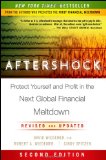
FTMWeekly Interview: Robert Wiedemer on the Global Financial Meltdown and his book, Aftershock
Podcast: Play in new window | Download (Duration: 22:50 — 16.0MB) | Embed

FTMWeekly Radio Interview with Author, Robert Wiedemer
FTM (Jerry Robinson): All right, well, joining me on the line is Robert Wiedemer. He’s the president and CEO of The Foresight Group, and he’s the author of the Wall Street Journal best-seller, Aftershock: Protect Yourself and Profit in the Next Global Financial Meltdown. Bob, it’s great to have you on “Follow the Money Weekly Radio.”
 WIEDEMER: Well, I think, as you say, the recent moves are partly (obviously) an expectation of inflation. I’m not sure if we won’t see a pullback in yields, though, shorter term. But longer term, clearly, you’re going to find inflation becomes the overriding factor—because I don’t think the Fed can pull the money back. As one of my friends in the Fed has said, “Inflation is not something that’s forced on you; it is a choice.” And the reason we tend to choose inflation, it is the easy out; it’s a fairly easy way to try and grow the economy. The other alternatives are not as easy, whether it be taxes or so forth, and so that’s why they tend to go into that trap. As you said, it’s hard to (quote) “pull the liquidity out once you’re doing it,” because every time you do that you’re going to slow the economy down; you’re going to create problems; and again, there’s no easier out at that point. And you have to, of course, pull the inflation trigger back, or the money supply spigot back even harder, making for a much harder pullback than if you’d just not done it in the first place. So, it gets harder and harder to pull it back, because you’re having to hit the economy harder and harder than if you just never opened the spigot in the first place. It’s a little like a Chinese finger trap: don’t put your finger in it. It will be very difficult to pull back out.
The Pirates of Manhattan: Exposing Wall Street
Listen as author Barry James Dyke explains the corruption on Wall Street and his latest book, The Pirates of Manhattan.
FTMQuarterly Newsletter – Fall 2010 Issue (PDF)
This is a protected post. Learn more about becoming an FTM Insider.